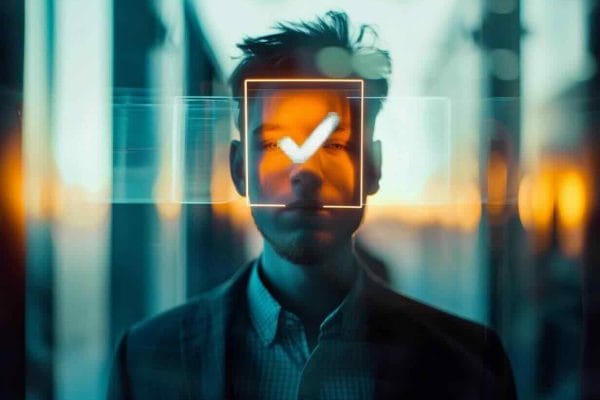
Western Australia Police will trial real-time facial recognition cameras that scan the faces of people in crowds and check them against a watchlist, becoming the first police force in the country to use the technology on live video feeds. The cameras will be deployed in a marked van outside major events and in crowded areas, with public signage flagging their presence.
The system matches passing faces against a database of specific people. Police Commissioner Col Blanch said that watchlist would hold about 4,000 people with outstanding arrest warrants, along with thousands of registered child sex offenders and people reported missing. If the technology flags a match, the image is retained and an alert is sent to nearby officers to confirm the person’s identity, while images of people not on the list are pixelated and deleted almost immediately.
Blanch sought to head off privacy concerns, drawing a contrast with ordinary surveillance cameras. “This is not about mass surveillance,” he said, adding that the tool targets “those in our community who are wanted by police.” He argued the approach was less intrusive than standard CCTV, saying the technology “pixelates those who are not on the list, does not store information, deletes it immediately.” The force has used facial recognition on previously obtained footage for more than a decade, but the trial marks the first time Australian police have run it against live feeds for near-instant detection.
The plan drew immediate pushback. University of Western Australia law lecturer Anna Zenz warned that even state-of-the-art tools are only around 90 percent accurate and can carry algorithmic bias, with datasets reflecting “racial biases, gender biases” that can lead to discriminatory outcomes, and she raised the risk of function creep beyond the stated purpose. A Greens member of parliament described the move as overreach, while the opposition leader voiced support for giving police more tools.
The trial lands amid a wider wave of police facial recognition. UK forces have pushed ahead with live deployments, with the Met Police reporting 173 arrests from its Croydon facial recognition pilot and Cambridgeshire Police deploying live facial recognition in Peterborough. The commissioner said he could not disclose the cost or the company behind the WA trial while it remained a trial.
Police have not ruled out wider use of the technology in future, including at major events later in the year.
Sources: ABC News
–
By Cass Kennedy