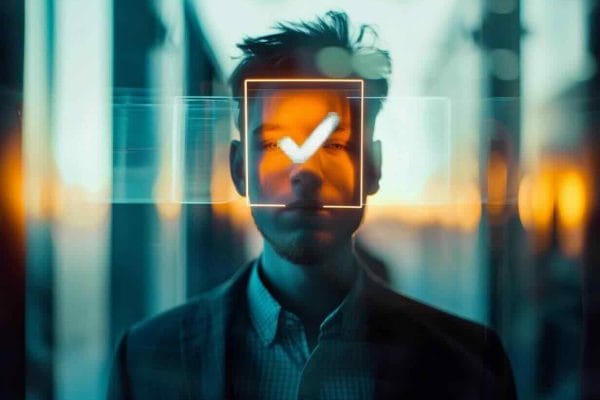
Match Group is rolling out its ‘Face Check’ facial verification feature across the United States for its flagship app, Tinder, aiming to set a new standard for dating app safety.
The feature, announced, is a “first-of-its-kind” initiative that makes biometric verification mandatory for all new users in deployed regions. This marks a significant shift in consumer technology, moving biometric verification from an optional “opt-in” for a trust badge to a mandatory “condition of service.” The feature is already live in California and seven countries, including Canada and Australia, and will expand to all remaining U.S. states “in the coming months”.
The ‘Face Check’ process requires new members to record a “short video selfie”. The system then performs two distinct checks: a liveness check to confirm the person is “real and physically present,” and a likeness check to confirm the face in the video “matches the one shown in their profile photos”.
Tinder is justifying the mandatory collection by highlighting dramatic safety improvements. In markets where Face Check is active, the company reports a greater than 60% decrease in exposure to potential bad actors (such as bots and fake profiles) and a more than 40% decrease in bad actor reports from users.
The program’s data privacy policy is a key component. Tinder states that the video selfie itself is “erased” after verification. However, the company confirms it retains two “non-reversible, encrypted” biometric artifacts: a “face map” (facial geometry) and a “face vector” (a numerical representation). This retained biometric template is the core of the anti-fraud system, as Tinder uses it to “detect when the same face is used across multiple accounts,” effectively enforcing a “one face, one account” policy to cripple scammers and bot farms.
Match Group plans to begin introducing Face Check to its other portfolio apps, such as Hinge, Match, and OkCupid, in 2026.
Tinder’s expansion of mandatory biometric verification comes after the company introduced ID verification features and has defended its biometric data practices in court.
–
By the ID Tech Editorial Team