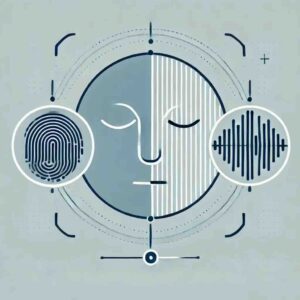
Biometric technology has gone from a frontier science to an everyday reality, reshaping industry economics in multiple sectors. Businesses now use fingerprints, facial recognition and other unique biological identifiers to manage access and streamline operations.
The financial implications are significant and multifaceted.
1. Banking and Finance
Financial institutions are trading in-person services for digitized processes. The pros of online banking — access from anywhere, convenient transactions, streamlined and cost-saving service and support delivery — outweigh the cons of traditional brick-and-mortar banking businesses. This is propelling the establishment of banks that operate only in mobile apps and cyberspace. Close to 77% of Americans now prefer to manage their bank accounts, receive funds and make payments virtually.
Banking, Financial Services and Insurance (BFSI) enterprises are among the top seven favorite hacker-targeted businesses. This is fuelling a demand for secure digital banking — the main reason behind the widespread adoption of biometrics in finance.
Banks are incorporating AI and machine learning to boost the functionality of biometric verification systems. Unfortunately, cybercriminals have access to the same tools, too. While developers and software engineers use these technologies to design systems to thwart breach attempts, black hats are also busy devising sophisticated malicious tactics.
AI-driven cybercrime is on the rise, with deepfakes contributing largely to this scheming activity. In fact, from 2023 to 2024, the sale of deepfakes on the dark web increased by 223%.
When an attack finds a finance company of any size underprepared or defenseless, the business receives a blow to its pockets and reputation. The affected entity may be penalized for violating privacy and data security regulations. Should customers decide to sue for damages, the losses increase.
2. Healthcare
Patient identification mistakes account for about 70% of errors in healthcare centers. This problem is not one-sided. Medical facilities also bear the brunt.
Incorrectly matching case files to patients results in treatment delays, misdiagnoses and billing issues. In addition, hospitals lose approximately $1.3 million to patient identity resolution every year. Considering that $17.4 million goes toward resolving denied insurance claims arising from patient misidentification, it’s no longer pocket change, but a dent to the bottom line.
When malign actors acquire patients’ and workers’ confidential information, they put you in violation of data privacy laws like HIPAA, earning you hefty compliance fines and lawsuits to compensate for damages, not to mention the sudden financial requirements to build back posture and trust.
Medical identity fraud, arising from either account takeover or faked documents, is another leading contributor to fraud in health care institutions. Having claim applicants confirm their identities using automated biometric matching algorithms — either remotely or on-site — can eliminate malicious access to account benefits.
3. Trucking and Transportation
The trucking industry faces unique security and efficiency challenges in monitoring fleets and driver work hours. An electronic logging device (ELD) helps keep track of duty status records. Before this innovation, drivers manually logged their working hours on spreadsheets.
ELDs integrated with biometric modalities like face authentication in truck cabins further assure compliance with hours-of-service regulations. However, trucking companies must receive consent before collecting and storing workers’ biometrics.
Meanwhile, security concerns remain paramount across transportation networks. Cybercriminals are increasingly logging in rather than hacking into networks through valid — but usually stolen — accounts. This method is quickly becoming the preferred gateway, accounting for 30% of all access breach incidents. Accordingly, biometric authentication provides a powerful countermeasure against these credential-based attacks.
The passenger car driver causes 70% of fatal truck-passenger-vehicle-involved crashes in the U.S. Facial recognition software in in-cab cameras can protect working motorists’ rights by proving they are not at fault in the event of an accident.
Innovation continues in this sector, with monitoring systems using AI and deep learning to monitor cabins. A five-year analysis of several intelligent methods for detecting on-road fatigue and distraction confirmed that driver drowsiness monitoring systems promote alertness. This, in turn, prevents accidents that will cost you a pretty penny in medical bills, repairs, replacements and compensation payouts.
4. Real Estate
In real estate, biometric technology is helping owners and property managers optimize access, tenant management and transaction security. It’s commonplace to find apartments, offices and commercial buildings using facial recognition or fingerprint scans to secure properties and occupants.
Biometrics also play a growing role in remote closings. Identity verification through voice or facial scans minimizes fraud during high-value digital transactions by providing a secure authentication method. Agents spend less time on paperwork and more time closing deals. Biometric modalities continue to show impressive potential in real estate for securing safes and governing access at entries or exits.
Invest in Biometrics for Savings Tomorrow
Market projections indicate accelerating adoption and technological sophistication over the next few years. Businesses that find a way to balance implementation costs against the benefits will find biometrics increasingly essential to supporting market competitiveness and operational resilience.
–
May 29, 2025 – by Oscar Collins
Author Bio: Oscar Collins is the editor-in-chief at Modded, with over five years of experience writing in the tech space. He has bylines at Gizmodo, Auto News and Global Trade Mag. Follow him on X @TModded for frequent updates of his work.