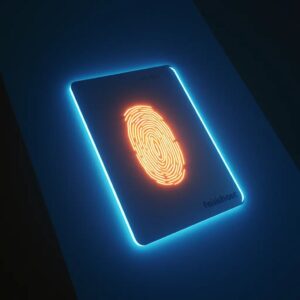
Latvia-based biometric payments provider Handwave has signed an agreement with Visa to integrate its palm-based recognition technology into one of the world’s largest payment networks. The partnership positions Handwave’s contactless identity and payment platform for broader rollout across European and U.S. retail markets.
Integrating Palm Recognition into Visa’s Network
Handwave’s system enables consumers to complete transactions by holding their palm over a specialized sensor, which scans both surface patterns and subdermal vein structures to create a secure, encrypted biometric identifier. This process eliminates the need for physical cards, mobile devices, or QR codes, offering a hands-free checkout experience. Through its agreement with Visa, Handwave aims to connect this technology directly into existing merchant payment infrastructure, reducing integration costs and speeding time-to-market.
The company says its platform supports liveness detection and multi-factor authentication, ensuring that each transaction is both quick and secure. By embedding palm-based verification within Visa’s network, Handwave plans to make biometric payments available to a much larger audience of consumers and merchants than it could reach independently.
Market Expansion Strategy
The Visa partnership comes as biometric payment adoption is accelerating globally. In July 2025, Tencent introduced its Weixin Palm Pay service in China, highlighting increasing competition in the palm authentication space. Handwave is positioning itself as a European alternative to closed biometric payment systems, offering its platform to third-party retailers rather than operating its own retail ecosystem.
While the company recently secured $4.2 million in seed funding, its focus now is on executing live pilots with select merchants and obtaining the necessary regulatory certifications for international deployment. Founders Jānis Stirna and Sandis Osmanis-Usmanis, both with prior experience in the payments sector, see the Visa agreement as a key step toward scaling the service to mainstream adoption.
According to Stirna, Handwave’s goal is to “collaborate with any financial institution or acquiring bank” to make palm-based payments as accessible as possible. The Visa deal is expected to open doors to such collaborations, enabling deployments in multiple countries with minimal additional hardware requirements for participating merchants.
Sources: Fintechnews Baltic, Vestbee, Endroid, TechCrunch
–
By Ali Nassar-Smith