

• Skip to main content
  • Skip to secondary menu
  • Skip to primary sidebar
  • Skip to footer
  • Our Services
  • Contact Us
  • Newsletter
  • Top Nav Social Icons

ID Tech Wire small glowing logo

ID Tech

(formerly FindBiometrics)

Facetec
  • LEARN
  • News
    • Featured Articles
    • Interviews
    • Thought Leadership
    • Podcasts
    • Webinars
    • Year in Review
  • Deepfakes & AI
  • Applications
    • Biometric Security
    • Border Control and Airport Biometrics
    • Consumer and Residential Biometrics
    • Financial Biometrics
    • Fingerprint & Biometric Locks
    • Healthcare Biometrics
    • Justice and Law Enforcement Biometrics
    • Logical Access Control Biometrics
    • Mobile Biometrics
    • Other Biometric Applications
    • Physical Access Control Biometrics
    • Biometric Time and Attendance
  • Solutions
    • Behavioral Biometrics
    • Biometric Sensors and Detectors
    • Facial Recognition
    • Biometric Fingerprint Readers
    • Hand Readers & Finger Scanners
    • Iris Recognition
    • Biometric Middleware and Software
    • Multimodal Biometrics
    • Physiological Biometrics
    • Smart Cards
    • Vein Recognition
    • Voice and Speech Recognition
  • Companies
  • Podcasts
  • Events

Chicago Murder Trial Sparks Debate Over Reliability of Facial Recognition Evidence

August 26, 2025

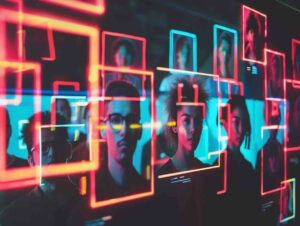
Facial recognition technology is at the center of a high-profile murder trial in Chicago, where defense attorneys argue the identification method used against their client was flawed and may have tainted the investigation. Tony Robinson, charged with the 2021 killing of University of Maryland graduate student Anat Kimchi, appeared in court this week as his lawyers filed a motion to suppress evidence stemming from a facial recognition match.Abstract digital illustration depicting facial recognition technology, featuring multiple overlapping frames containing blurred human faces illuminated in neon red and blue hues against a dark background, creating a visually striking and futuristic composition.
Defense Challenges Reliability

Robinson’s attorney, Mark Stevens, contended that the technology cannot be trusted as a basis for arrest. “The technology is not reliable enough to be the basis for an arrest, let alone a conviction,” Stevens told the court. He argued that facial recognition has a history of misidentifying suspects, particularly Black men, citing earlier research that documented racial disparities in performance.

That position was echoed by Harvard professor Dr. Latanya Sweeney, who has studied algorithmic bias. “Facial recognition systems have been shown in multiple studies to have higher error rates for people with darker skin tones,” she said. “Relying on these systems in criminal cases is deeply problematic.”

Prosecutors and Broader Context

Prosecutors countered that facial recognition was just one element in a broader investigation that also involved witness statements and physical evidence. They argue that the match from surveillance footage was not the sole basis for Robinson’s arrest, but part of a chain of corroborating evidence.

The courtroom dispute comes as facial recognition in law enforcement faces renewed scrutiny. A 2019 study by the National Institute of Standards and Technology (NIST) found significant demographic disparities in older algorithms, with higher error rates when identifying people of color. These findings have been widely cited by civil liberties advocates pressing for limits on police use of the technology.

Advances and Ongoing Debate

Technology developers and police agencies point out that newer systems show marked improvements. Independent testing by the UK’s National Physical Laboratory concluded that, at operational thresholds, algorithms currently used by the Metropolitan Police and South Wales Police exhibited no statistically significant bias across ethnicity, age, or gender. Officials say these results demonstrate that law enforcement can now deploy facial recognition without replicating past disparities.

But academics remain cautious. Professor Pete Fussey has argued that bias-free claims may overstate the case, pointing to small sample sizes and limited testing at higher sensitivity settings. Civil liberties groups also continue to warn that even if performance improves, the use of real-time facial recognition in public spaces raises broader questions about privacy, due process, and freedom of assembly.

The Chicago court has not yet ruled on whether to suppress the contested evidence. Its decision could have lasting implications for how U.S. law enforcement agencies deploy facial recognition and how courts weigh its reliability in criminal proceedings.

Source: Chicago Sun-Times

–

By Cass Kennedy

Related News

  • Rights Groups Urge Police Scotland to Halt Live Facial Recognition RolloutRights Groups Urge Police Scotland to Halt Live Facial Recognition Rollout
  • UK Deploys 10 Live Facial Recognition Vans Across Seven Police ForcesUK Deploys 10 Live Facial Recognition Vans Across Seven Police Forces
  • Metropolitan Police to Expand Live Facial Recognition Deployments Across LondonMetropolitan Police to Expand Live Facial Recognition Deployments Across London
  • Alabama Begins Mandatory Biometric Collection from Undocumented ImmigrantsAlabama Begins Mandatory Biometric Collection from Undocumented Immigrants
  • Colorado House Passes Strict Facial Recognition Regulations for Government UseColorado House Passes Strict Facial Recognition Regulations for Government Use
  • Florida Jail Implements Inmate Iris Scanning SystemFlorida Jail Implements Inmate Iris Scanning System

Filed Under: Features, News Tagged With: algorithmic bias, biometric surveillance, civil liberties, criminal justice, facial recognition technology, Law Enforcement Technology, legal precedent, racial bias

Primary Sidebar

ID Talk Podcast jet black promotional banner with fingerprint microphone icon and Listen Now button

Partners

facetec logo

FaceTec’s patented, industry-leading 3D Face Verification and Reverification software anchors digital identity, creating a chain of trust from user onboarding to ongoing authentication on all modern smart devices and webcams. FaceTec’s 3D FaceMaps™ finally make trusted, remote identity verification possible. As the only technology backed by a persistent spoof bounty program and NIST/iBeta Certified Liveness Detection, FaceTec is the global standard for 3D Liveness and Face Matching with millions of users on six continents in financial services, border security, transportation, blockchain, e-voting, social networks, online dating and more. www.facetec.com

Unico is a global identity network that forges trust between people & companies. We identify people globally so they can have safe, efficient and private digital access to services around the world. Unico is present in over 20 countries, and serves 165 million users with over 1.5 billion identity verifications every year. We are the leading global identity network.www.unico.io

Innovatrics company logo with tagline

Innovatrics is an EU-based provider of trusted biometric solutions for governments and enterprises. Our algorithms consistently rank among the fastest and most accurate in fingerprint, face, and iris recognition. Since 2004, we have partnered with all types of organisations to build trusted and flexible biometric identification solutions. Our solutions are used in more than 80 countries, benefiting over a billion people worldwide. https://www.innovatrics.com/

Identity Week logo

Identity Week aims to be a significant identity industry catalyst. It’s our mission is to help accelerate the move towards a world where trusted identity solutions enable governments and commercial organisations to provide citizens, employees, customers and consumers with a multitude of opportunities to transact in a seamless, yet secure manner. All the while preventing the efforts of those intent on doing harm. https://identityweek.net/

The Prism Project logo

The Biometric Digital Identity Prism is a market landscape framework designed to help influencers and decision makers understand, innovate, and implement digital identity technologies and solutions. This innovative framework for understanding and evaluating the rapidly evolving biometric digital identity marketplace is the only market model that is truly biometric-centric based on the foundational conviction that in the age of digital transformation the only true, reliable link between humans and their digital data is biometrics. https://www.the-prism-project.com

Recent Posts

  • ID Tech Digest – September 18, 2026
  • AI Update: Researchers Used Claude to Access OpenAI’s Internal Repository
  • EU KIDS Act Proposal Sets Privacy-Preserving Age Verification Requirements
  • Delinea Joins Project Glasswing to Test Privileged-Access Code With Claude
  • Alabama Makes Login.gov the Primary Identity Check for Initial Unemployment Claims

Biometric Associations

IBIA and fido

Footer

  • About Us
  • Company Directory
  • Advertise With Us
  • Contact Us
  • Privacy Policy
  • Terms of Use
  • Archives
  • CCPA: Do not sell my personal info.

Follow Us

Copyright © 2026 Verse Media