Welcome to the newest edition of ID Tech’s AI Update. Here’s the latest big news on the shifting landscape of AI and identity technology:
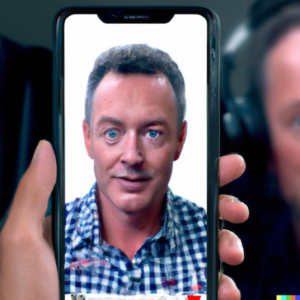
OpenAI launched a new version of its video generation system, Sora 2, which now features audio that syncs with its generated videos. Sora 2 was introduced alongside a new social media app dedicated to allowing users to share AI-generated videos. Its “Cameo” feature allows the system to generate unnervingly accurate likenesses of real people – including the users themselves, should they opt in. This has led to quite a few deepfake videos of OpenAI CEO Sam Altman.
OpenAI is now valued at about $500 billion after closing an employee share tender of about $6.6 billion. The round saw participation from SoftBank and Abu Dhabi’s MGX, alongside Thrive Capital, T. Rowe Price, and Dragoneer. The firm has reportedly told shareholders it generated about $4.3 billion in revenue in H1 2025 and burned roughly $2.5 billion in cash in the same period. Its R&D costs alone are thought to have amounted to $6.7 billion in H1.
Samsung and SK Hynix have reportedly signed Letters of Intent to supply OpenAI with up to 900,000 DRAM wafers a month for its massive “Stargate” project. The Dynamic Random-Access Memory wafers are critical components in training and running advanced AI models. This is a crazy amount of DRAM. The target would represent something like 40 percent of total global DRAM output if and when it’s fully ramped.
Anthropic says its newest Claude model can clone entire enterprise apps like Slack by using its autonomous coding agent capabilities. Apparently there are demos of Claude Sonnet 4.5 running for 30 hours to do just that. If enterprise agents can clone these kinds of tech stacks, they can also spin up bespoke KYC/IDV front ends – or convincing lookalikes.
Cerebras Systems has raised $1.1 billion in a Series G funding round at an $8.1 billion post-money valuation, with Fidelity and Atreides co-leading and other participants including Tiger Global, Valor Equity Partners, and 1789 Capital (the VC where Donald Trump Jr. is a partner). The firm specializes in wafer-scale AI processing: Instead of cutting a silicon wafer into lots of small chips, Cerebras uses the whole wafer as one giant chip, which translates into faster, more efficient computing. It says it’s ramping up for an IPO.
Black Forest Labs (BFL) is in early talks to raise $200–300 million at a roughly $4 billion valuation. The Freiburg-based firm specializes in image and video generation, with its Flux models notably being used in Adobe Photoshop and Meta’s new Vibes platform. Flux offers in-context image editing (Kontext) and open-weights variants, opening the door to all kinds of experimentation, including some potential deepfake-type tinkering.
Apple is reportedly halting efforts to design a revamped VR headset and pivoting to AI-infused smart glasses in order to keep up with rivals like Meta. The original plan had been to work on a “Vision Air” device to follow the Vision Pro headset. But Apple is now focusing on the “N50” – a device that eschews any kind of display but features cameras, microphones, and AI tech – and is fast-tracking development of a display-equipped smart glasses device that could launch in 2028.
The chatbot’s take: In the immortal words of (deepfake) Sam Altman, “Meow”:

–
By Alex Perala